
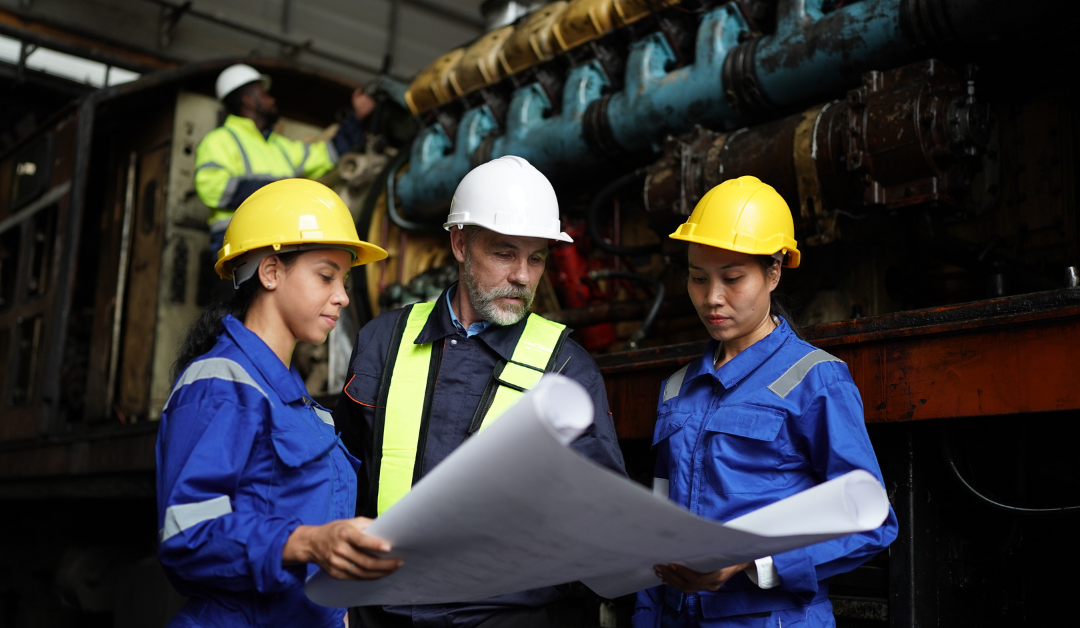
Every finished metal project starts somewhere. Sometimes it begins with a detailed blueprint that specifies every measurement and material. Other times, it starts with something much simpler, such as a rough sketch, an existing part, a broken component, or an idea that still needs to be developed.
Custom metalworking is the process of turning those ideas and requirements into functional metal components and finished products. Depending on the project, that process can involve cutting, bending, rolling, drilling, welding, machining, assembly, and other fabrication techniques. Some projects require only one or two of these steps, while more complicated builds may move through several different processes before they are complete.
Understanding how a project moves from an initial concept to a finished product can make it easier to prepare for custom fabrication and communicate what is needed.
Starting With the Purpose of the Project
Before metal is cut or equipment is turned on, the first step is determining what the finished piece needs to accomplish.
A fabricator may need to know where the component will be used, what it will support, whether it will be exposed to weather or chemicals, and how it needs to connect to surrounding parts. Dimensions are important, but the intended application can be equally important when planning the project.
The starting information can take several forms. A customer may provide:
- Detailed engineering drawings or blueprints
- A basic sketch with measurements
- An existing component that needs to be duplicated
- A broken or worn part that needs replacement
- A description of the desired finished product
Not every custom metalworking project requires a complete engineering package at the beginning. In some cases, an experienced fabricator can use an existing sample, drawing, or description to better understand the project and determine what information is still needed.
The more clearly the intended use can be explained, the easier it becomes to determine appropriate materials, dimensions, tolerances, and fabrication methods.
Turning an Idea Into a Fabrication Plan
Once the purpose and basic requirements are understood, the concept must be translated into a practical plan for fabrication.
A finished metal component may look simple, but creating it can require several carefully coordinated steps. A plate might need to be cut to shape, bent at specific angles, drilled for mounting hardware, and welded to another component. Another part may need machining after fabrication to achieve tighter dimensions or create specific features.
This planning stage is an important part of custom metalworking because the order of operations can affect both efficiency and accuracy.
For example, it may make more sense to cut certain holes before a piece is bent. In another application, machining may need to occur after welding. Material thickness, overall dimensions, required tolerances, and accessibility can all affect how the project should proceed.
Planning these steps before fabrication begins helps reduce unnecessary work and ensures that each stage prepares the component for the next.
Selecting the Right Material
Material selection can have a major effect on how a finished project performs.
Different metals offer different characteristics. Strength, weight, corrosion resistance, machinability, weldability, and cost can all factor into the decision. The best choice depends on how and where the finished component will be used.
Carbon steel is widely used in fabrication because of its strength and versatility. Stainless steel may be selected when corrosion resistance is particularly important. Aluminum provides a lighter-weight option for many applications, while specialty materials may be needed when a project has more demanding requirements.
Thickness matters as well. A piece of sheet metal and a heavy steel plate require different equipment and may behave differently during cutting, bending, welding, and machining.
Material selection during custom metalworking should therefore consider the entire fabrication process as well as the final application. A material must not only perform well after the project is complete, but also be suitable for the processes needed to create the part.
Cutting Raw Material Into the Required Shape
Once the design and material are established, cutting is often one of the first physical fabrication steps.
The appropriate cutting method depends on factors such as material type, thickness, shape, and required precision. Straight cuts may be performed with shearing equipment, while more detailed profiles can require other methods.
CNC plasma cutting is one option for producing shapes from metal plate. A computer-controlled plasma system follows a programmed cutting path, making it useful for components with specific profiles, openings, and other design features.
Staunton Machine Works' metal fabrication and repair capabilities include a 5-foot by 10-foot Koike CNC plasma table along with hydraulic metal shears and other fabrication equipment.
Accurate cutting creates a strong foundation for everything that follows. If the initial dimensions or profiles are incorrect, those errors can affect bending, welding, assembly, and final fit. All of this is part of the custom metalworking process.
Bending, Rolling, and Forming Metal
Many fabricated components require shapes that cannot be created through cutting alone.
Bending is commonly performed with a press brake, which applies force to metal to create specific angles. Larger equipment can accommodate substantial pieces of material and provide the force necessary to form thicker metal.
Rolling is another important process. Instead of producing a defined angle, rollers can gradually form metal into curves, cylinders, arcs, and other rounded shapes.
Custom metalworking may require one or several forming techniques depending on the design. A simple bracket might only require a few bends, while a larger fabricated assembly could incorporate rolled sections, flat plate, structural shapes, and welded components.
The equipment used also needs to match the scale of the job. For example, Staunton Machine Works' fabrication shop includes sheet metal and plate rollers and a 200-ton press brake with a 13-foot bed. Equipment of this size expands the range of material dimensions and project types that can be formed.
Welding the Individual Pieces Together
Welding allows separately fabricated components to become a single structure or assembly.
There are numerous welding processes and techniques, and the appropriate method depends on the materials involved, their thickness, joint design, and intended application. Preparation is also important. Surfaces may need to be cleaned, edges prepared, and pieces positioned carefully before welding begins.
Heat introduced during welding can affect metal, which means distortion must sometimes be considered as part of the fabrication plan. Larger or more complicated assemblies may require careful sequencing to maintain dimensions and alignment.
For many custom metalworking projects, welding is one stage in a larger process rather than the entire job. Pieces may already have been cut, bent, rolled, or drilled before they reach the welding stage. Additional machining or finishing may also be required afterward.
The quality of each earlier step contributes to how well the components ultimately fit together.
When Machining Becomes Part of the Project
Fabrication and machining are related but distinct forms of custom metalworking. Fabrication generally involves creating structures and components through processes such as cutting, bending, forming, and welding. Machining removes material from a workpiece to achieve particular dimensions or features.
Lathes, mills, and CNC equipment can be used to create holes, threads, slots, surfaces, and other details that may not be practical to achieve through fabrication alone.
Some custom metalworking projects require both disciplines.
A fabricated assembly, for example, may contain a component that needs a precisely machined surface. A replacement part might require a fabricated section along with machined mounting points. Combining the two processes can also be useful when repairing or reproducing industrial equipment components.
Staunton Machine Works' machine shop services include CNC machining as well as manual mills and lathes, providing an example of how fabrication and machining capabilities can complement one another.
Reproducing Parts That Are No Longer Available
Not every project begins with a new design. Sometimes the goal is to recreate something that already exists.
Older industrial equipment can remain operational for decades, but finding replacement components may become increasingly difficult. Manufacturers discontinue parts, companies go out of business, and original drawings can disappear over time.
In these situations, an existing component can sometimes serve as the starting point for custom metalworking.
A worn or broken part can be examined to determine its dimensions, material, important features, and function. From there, a replacement may be fabricated, machined, or created using a combination of processes.
This is often referred to as reverse engineering. It can be particularly valuable when one unavailable component is preventing an otherwise usable piece of equipment from operating properly.
The process still requires careful evaluation. Wear or damage on the original component can make measurements more difficult, and the fabricator needs to understand which dimensions are critical to proper fit and operation in order for custom metalworking to work properly.
Not Every Custom Project Is a Large Project
Industrial metal fabrication often brings images of large steel structures and heavy machinery to mind. However, custom projects can vary significantly in size.
A project may involve a large fabricated assembly, but it could just as easily be a small bracket, mounting plate, replacement component, modified piece of equipment, or one-off specialty part.
Quantity can vary as well.
Some customers need a single piece because a standard replacement is unavailable. Others need several matching components or ongoing production of the same part.
Custom metalworking is defined more by the specific requirements of the project than by its physical size or production quantity. If an existing off-the-shelf product cannot provide the correct dimensions, shape, material, or function, custom fabrication may offer another option.
Moving From Raw Metal to a Finished Product
By the time a metal project is complete, it may have passed through numerous pieces of equipment and several different processes.
What began as flat plate, bar stock, tubing, or another raw material may be cut, bent, rolled, drilled, welded, machined, and assembled before reaching its final form.
That transformation is what makes custom metalworking useful for such a wide variety of applications. Instead of being limited to existing components with predetermined sizes and configurations, a project can be built around its actual requirements.
The process also does not always begin with perfect drawings. A blueprint, sketch, sample, broken component, or detailed description can provide a starting point. From there, the requirements can be evaluated and translated into a practical fabrication plan.
Bringing a Metal Project to Life
Successful custom fabrication depends on understanding the purpose of the project before deciding how to manufacture it. Material selection, cutting methods, forming processes, welding, machining, and final measurements all contribute to the result.
For businesses, equipment owners, and individuals dealing with unusual metal components or specialized projects, custom metalworking provides a way to create something that may not be readily available off the shelf.
Staunton Machine Works has provided machining, fabrication, welding, and related industrial services for generations. Its combination of traditional metalworking experience and modern fabrication equipment allows the team to work with projects ranging from individual replacement components to larger custom builds.
If you have an idea for a custom metalworking project, contact us at Staunton Machine Works to discuss what you need and learn how their fabrication team can help bring it to life. Stay up to date with us on Facebook.