Moving heavy industrial equipment is a complex process that requires far more than enough power to lift a machine. Manufacturing equipment, CNC machines, presses, production systems, and other large machinery can weigh thousands of pounds, have unusual centers of gravity, and require precise handling to prevent damage. Moving these machines through an active facility can add narrow aisles, low overhead clearance, sensitive flooring, and nearby equipment to the challenge.
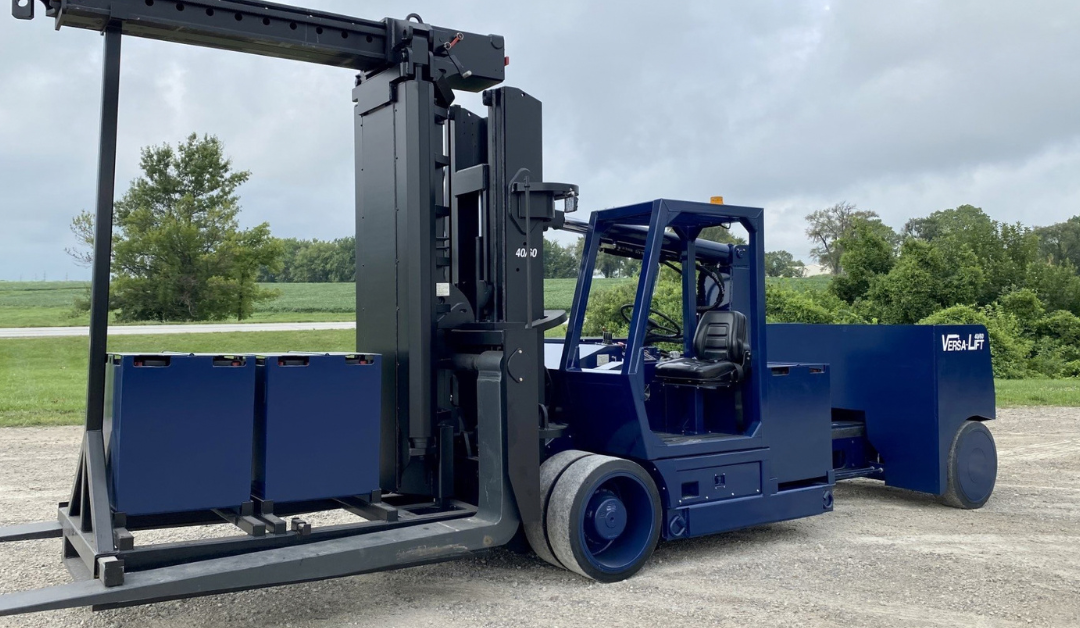
A professional machinery moving service approaches the job as a carefully planned rigging operation. Before anything moves, the crew must understand the equipment, the surrounding facility, the route, and the tools required for the job. Specialized equipment such as hydraulic jacks, machinery skates, forklifts, cranes, and machines like a Vera-Lift can then be used to lift, move, and position heavy equipment safely.
Understanding what goes into these projects helps explain why planning, equipment selection, communication, and controlled movement are so important when relocating industrial machinery.
Heavy Equipment Moves Begin With Planning
The physical move may be the most visible part of the job, but much of the work begins before the machinery leaves its original position.
A machinery moving service first needs to understand what is being moved. Weight is an obvious consideration, but it is not the only one. Dimensions, balance, lifting points, configuration, and the sensitivity of the equipment can all affect the plan.
The surrounding environment matters too. A crew may need to determine whether the machine can pass through existing doorways, whether overhead obstacles are present, and whether there is enough room to maneuver equipment around corners.
The destination must also be considered. It does little good to successfully remove a machine only to discover that the equipment or route cannot accommodate final placement.
Planning these details in advance allows the crew to determine what equipment and methods are appropriate before lifting begins.
Understanding the Weight and Center of Gravity
Heavy equipment does not always distribute its weight evenly.
A machine that appears balanced from the outside may contain motors, gearboxes, tooling, or other heavy components concentrated on one side. That uneven distribution affects how the equipment behaves when it is lifted.
The center of gravity is particularly important. If lifting equipment is positioned incorrectly relative to the center of gravity, the load may become unstable.
Experienced riggers evaluate the load before determining where and how it should be lifted. The objective is to maintain control throughout the process rather than reacting to unexpected movement after the equipment is already suspended or elevated.
A machinery moving service may also need to determine whether components should be removed before relocation. Attachments, tooling, or other parts may sometimes need to be secured or handled separately depending on the equipment and move.
Understanding the load allows the crew to choose rigging methods based on the actual machine rather than relying on assumptions.
Evaluating the Route Before Moving
The path between the machine's current position and its destination can present just as many challenges as the machine itself.
Industrial facilities were not always designed with future equipment relocation in mind. Machines may need to travel between production lines, around structural columns, through doorways, or beneath pipes and other overhead infrastructure.
Before the move, measurements can help identify potential obstacles. The crew needs to know whether the machine and moving equipment have sufficient clearance throughout the route.
Floor conditions are another consideration. The route should be evaluated for transitions, slopes, uneven surfaces, thresholds, and other conditions that could affect movement.
A professional machinery moving service can use this information to determine how the equipment will travel through the facility and where additional preparation may be required.
Planning the entire route also reduces the likelihood of reaching a point where the machine cannot continue without changing the approach.
Choosing the Right Rigging Equipment
There is no single piece of equipment that works for every machinery move.
The appropriate tools depend on machine weight, dimensions, available clearance, facility conditions, and how precisely the equipment needs to be positioned. Some moves may rely heavily on forklifts, while others require hydraulic lifting equipment, machinery skates, cranes, or a combination of tools.
For example, Staunton Machine Works lists specialized equipment for its rigging and machinery moving services, including a 40/60 Vera-Lift, precision skates and rollers, hydraulic jacks, forklifts, and crane support.
A Vera-Lift is particularly useful in industrial rigging because it is designed to lift and maneuver heavy machinery while providing control in areas where traditional lifting methods may be difficult to use.
Precision skates and rollers serve another purpose. Once a machine has been raised enough to place the appropriate moving equipment beneath it, skates can help crews move heavy loads across a facility in a controlled manner.
The safest solution may involve several pieces of equipment working together rather than relying on one machine for the entire move.
Using Hydraulic Jacks for Controlled Lifting
Heavy equipment often needs to be raised before it can be moved.
Hydraulic jacks can provide the controlled lifting force required to elevate machinery incrementally. This may allow riggers to position skates, rollers, blocking, or other equipment underneath the machine.
The key word is controlled. Heavy machinery should not suddenly shift as it is being raised. Crews need to consider balance and stability throughout the lifting process.
A machinery moving service may raise a machine gradually while monitoring how the load responds. Depending on the equipment, multiple lifting points may be necessary to maintain stability.
Hydraulic equipment can produce tremendous force, which makes proper positioning and operation essential. The capacity of the equipment must also be appropriate for the load being handled.
Moving Machinery With Skates and Rollers
Once machinery has been lifted and properly supported, it may need to travel horizontally across the facility.
Machinery skates and rollers are designed to help heavy equipment move across suitable surfaces while maintaining greater control than simply attempting to drag the load. These tools can be particularly helpful for machines that must travel through indoor industrial spaces.
However, putting a machine on skates does not make route planning unnecessary.
Floor conditions, turns, changes in elevation, and clearance still matter. The load must remain stable as it travels, and movement should be deliberate rather than rushed.
A machinery moving service can coordinate workers and equipment so the load moves as a controlled unit. Communication becomes especially important when crew members are positioned in different areas around a large machine and may not all have the same line of sight.
Using Forklifts and Specialized Lifting Equipment
Forklifts are common throughout industrial facilities, but moving large machinery requires careful attention to the forklift's capacity and the characteristics of the load.
A machine may be heavier, wider, taller, or more unevenly balanced than the materials normally handled by a facility's everyday forklift. Simply having forks that fit beneath a machine does not mean the equipment is appropriate for moving it.
Specialized lifting equipment provides additional options for difficult moves.
The 40/60 Vera-Lift listed among Staunton Machine Works' rigging equipment is an example. Equipment of this type can help handle substantial loads while providing maneuverability useful for machinery relocation and installation.
For a machinery moving service, having multiple equipment options is important because facility conditions vary considerably. A large open warehouse may allow an approach that would be impossible inside a crowded manufacturing plant.
When a Crane Is Needed
Some machinery moves require equipment to be lifted vertically, transferred between elevations, loaded onto transportation, or placed where ground-based moving equipment cannot perform the entire job.
That is where crane support may become part of the operation.
Crane work requires careful consideration of load weight, lifting points, rigging configuration, reach, and placement. The load must remain controlled while suspended and be guided carefully toward its destination.
Crane support can also be useful when equipment needs to be loaded or unloaded as part of a larger relocation.
A machinery moving service coordinating a project involving cranes must account for how the crane portion of the move connects with the rest of the operation. The machine may need to transition from rigging equipment to a crane, onto transportation, and eventually back onto moving equipment at its destination.
Each transition requires planning so control of the load is maintained.
Protecting the Machinery During the Move
Worker safety is critical, but the machinery itself must also be protected.
Industrial equipment can represent a significant investment. CNC machines, manufacturing systems, presses, and other specialized equipment may contain sensitive components that can be damaged by impact, vibration, improper lifting, or uncontrolled movement.
Preparation may include securing moving components, removing loose attachments, protecting vulnerable areas, or identifying lifting points that will not damage the machine.
Care must also be taken when placing rigging equipment against finished or machined surfaces.
The goal of a machinery moving service is not simply to get the equipment from one location to another. The machine should arrive ready for the next stages of placement, installation, connection, or commissioning without unnecessary damage caused by the move itself.
Communication Keeps the Move Coordinated
Machinery relocation is a team effort.
During certain stages of a move, one worker may have a clear view of one side of the machine while another monitors an obstacle elsewhere. The equipment operator may not be able to see every clearance point.
Clear communication allows the crew to coordinate movement and stop when necessary.
Before movement begins, workers should understand the plan, their responsibilities, and how directions will be communicated. During the move, there should be a clear method for signaling operators and responding if conditions change.
A machinery moving service may also coordinate with facility personnel. Production schedules, access restrictions, utility shutdowns, and other activities can affect when and how machinery can be moved.
Good communication helps keep everyone working from the same plan.
Preparing the Facility for Heavy Equipment Movement
Facility preparation can make the actual move significantly more efficient.
The planned route should be cleared of unnecessary materials, pallets, carts, and other obstacles before the rigging crew begins moving the machine. Nearby equipment may also need protection or temporary relocation.
Doorways and access points should be measured in advance rather than relying on visual estimates.
Utilities are another consideration. Machinery may be connected to electrical systems, compressed air, water, gas, exhaust systems, or other services. Those connections typically need to be properly addressed before relocation begins.
The destination should also be ready.
If a machine is being placed on a foundation, pad, or predetermined footprint, preparing that location beforehand reduces delays once the equipment reaches it.
A machinery moving service can then focus on executing the planned move instead of waiting for avoidable obstacles to be addressed.
Loading and Unloading Heavy Machinery
When machinery is being relocated to another facility, transportation adds another stage to the process.
The equipment may need to be moved from its operating position to a loading area, lifted or transferred onto a trailer, secured for transportation, and then unloaded at the destination.
Each step introduces different considerations.
Loading areas must provide enough space for the required equipment. The machinery needs to be positioned properly for transportation, and appropriate securement is essential before the vehicle begins moving.
At the destination, the process occurs in reverse, but the conditions may be completely different. The new facility may have different door dimensions, floor layouts, clearances, or equipment access.
This is why planning should account for both ends of the move rather than concentrating solely on removal from the original facility.
Precision Matters During Final Placement
Moving the machine across a facility is only part of the job. In many cases, the final few feet require some of the greatest precision.
Industrial machinery may need to align with existing production equipment, foundations, mounting holes, utility connections, or workflow layouts.
Large movements can get the machine into the general area, while jacks, skates, rollers, and other rigging tools can assist with controlled final positioning.
A machinery moving service must consider this final placement when developing the original plan. Equipment that works well for transporting a machine across an open floor may not provide the precision required for the last stage of positioning.
Careful placement helps prepare the machinery for installation, leveling, anchoring, utility connections, and eventual return to operation.
Reducing Downtime Through Careful Planning
For an operating facility, downtime can be one of the biggest concerns associated with moving machinery.
A machine that is not operating may interrupt production, affect downstream processes, or delay customer orders. If multiple machines are being relocated, the impact can become even greater.
Planning can help reduce unnecessary delays.
Preparing access routes, confirming equipment requirements, coordinating utility disconnections, and having the destination ready before the move begins can prevent avoidable interruptions.
An experienced machinery moving service also considers the sequence of operations. For plant relocations involving multiple machines, the order in which equipment is moved can affect how quickly production can resume.
Safety should never be sacrificed for speed, but efficient preparation can help a move proceed without unnecessary downtime.
Safe Machinery Moving Is a Complete Process
Heavy equipment relocation involves much more than lifting a machine and carrying it somewhere else. Every phase, from evaluating the load and planning the route to choosing rigging equipment and completing final placement, affects the safety and success of the move.
Equipment such as Vera-Lifts, hydraulic jacks, precision skates and rollers, forklifts, and cranes provides the lifting and moving capability required for challenging industrial projects. Just as important are the planning and coordination that determine how those tools should be used.
Working with a professional machinery moving service can help facilities approach equipment relocation with the preparation, specialized tools, and controlled methods required for heavy industrial machinery.
At Staunton Machine Works, we provide rigging, machinery moving, crane, fabrication, and machine shop services for industrial and commercial customers. Whether a project involves relocating one machine or coordinating a larger plant move, proper equipment and careful planning can make a significant difference.
Stay up to date with us at Staunton Machine Works by following us on Facebook.